


Even the most obedient employees rarely say "I'm not in good form today". It's not a lie; it's just that they can't bring themselves to say it. I've talked to many team leaders about this: If an employee is in a bad mood, will they speak up? The answers are basically the same - no. Some are afraid it will delay production time, some think they can just tough it out, and some simply haven't noticed at all.
There are many reasons for not speaking up, but the risks won't disappear just because "it wasn't said". So what should we do? Let the equipment speak. The value of the pre-shift health detection all-in-one machine is to turn "something that can't be said" into "visible data".
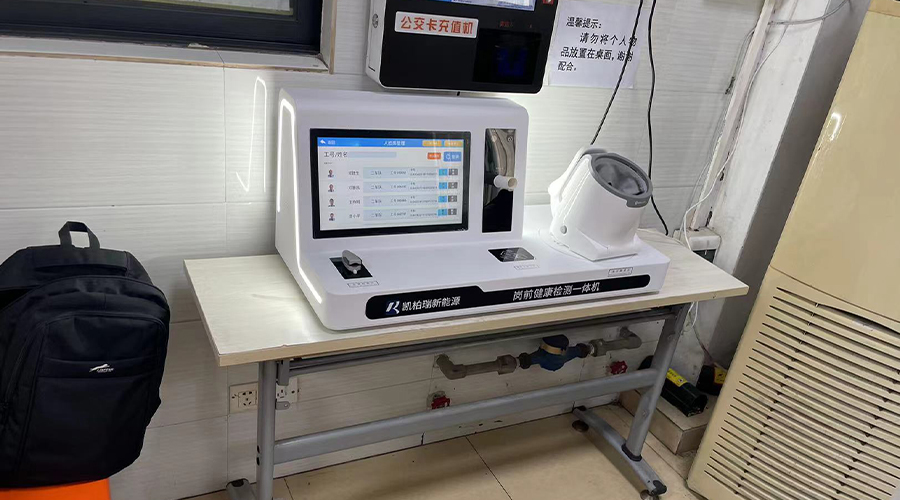
What's the name of the pre-employment health screening machine? It's quite simple - employees stand on it for 3 minutes, and all the indicators such as blood pressure, heart rate, blood oxygen level, body temperature, and psychological state will be measured and the results will be available immediately. There is no need for employees to make any verbal descriptions. Emotions, fatigue, and fluctuations in indicators - these "embarrassing to talk about" states are all represented by the data on behalf of the employees.
Enable employees to be noticed without having to speak out - this is not surveillance; it's another form of protection. Some are worried that being identified as "not good" will lead to differential treatment? Actually, quite the opposite: The pre-job health detection unit does not diagnose or label; it only provides a reference. If the condition is stable, they can go to work as usual. The data being recorded not only makes each arrangement more justified but also makes employees feel more at ease.
Which is your approach at the front line, "depending on the employees' words" or "depending on the data"? Put the pre-job health detection unit into the pre-shift meeting to let the data speak for the employees - in front of the pre-job health detection unit, everyone is the same and the standards are consistent: Employees don't feel embarrassed, and team leaders don't rely on their instincts. There is an additional safety barrier in place as a pre-emptive measure.