


Technical secondary schools are the main venues for cultivating grassroots traditional Chinese medicine talents. Traditional Chinese medicine teaching faces issues such as insufficient practical training, abstract content, and difficulties in passing on experience. The implementation of the Chinese medicine AI assistant in schools uses intelligent technology to fill the gaps in teaching and promotes the upgrading, improvement, and efficiency enhancement of the Chinese medicine vocational education model.
The Chinese medicine AI innovates teaching methods and solves teaching difficulties. Regarding the obscure and difficult-to-understand problems of TCM syndrome differentiation and acupuncture practice, the Chinese medicine AI assistant uses functions such as four diagnostic methods recognition and intelligent acupuncture simulation to make abstract theories and practical training more intuitive and understandable. At the same time, it digitizes and consolidates the experience of renowned doctors, unifies teaching standards, and solves the problems of scattered traditional teaching experience and uneven transmission.
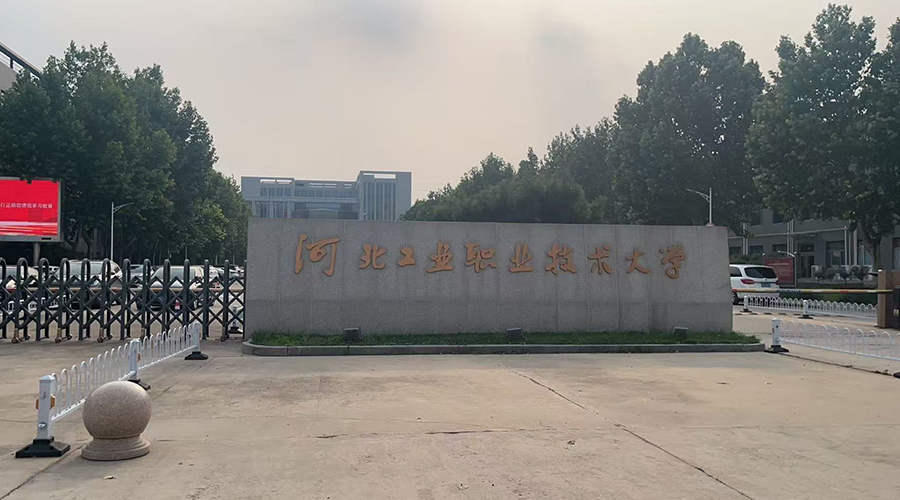
The AI assistant of traditional Chinese medicine helps students conduct efficient practical training and enhance their professional skills. The AI provides 24/7 simulated diagnosis, tongue and pulse diagnosis, formula combination and other practical scenarios, offers real-time correction and answers, forms a closed-loop learning model, and steadily improves students' practical proficiency and diagnostic ability. At the same time, it can customize personalized learning plans, teach according to individual needs, and cultivate traditional Chinese medicine talents who possess both traditional expertise and digital capabilities.
The AI assistant for traditional Chinese medicine helps teachers reduce burdens and increase efficiency, thereby enhancing teaching effectiveness. The AI takes on repetitive tasks such as answering basic questions, providing practical demonstrations, conducting student situation statistics, and conducting teaching evaluations, thereby freeing up teachers' energy. Based on intelligent student situation analysis, it accurately identifies students' weaknesses, assisting teachers in precise teaching and effectively improving classroom quality and teaching efficiency.
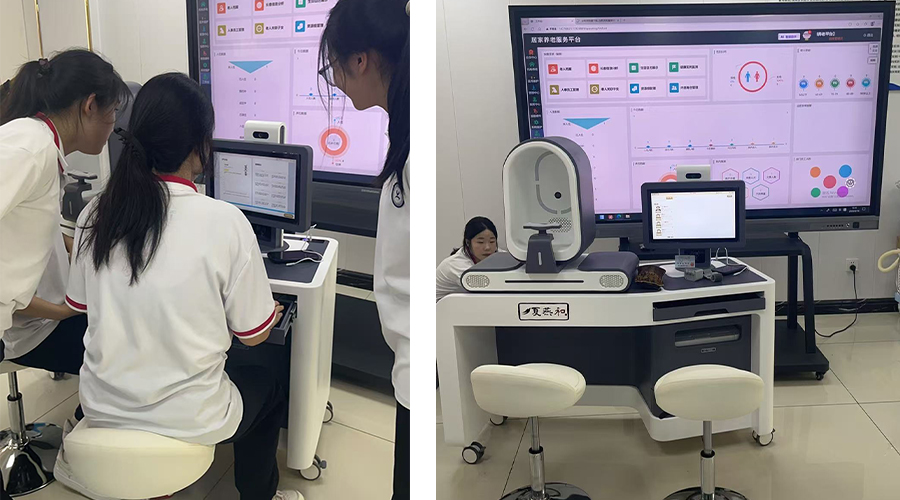
The AI assistant for traditional Chinese medicinekeeps up with the digitalization trend in the industry, enhancing students' employment competitiveness. During their studies, students master the operation of intelligent traditional Chinese medicine equipment and digital diagnosis and treatment thinking, developing a comprehensive skill set combining traditional Chinese medicine with intelligent technology. This makes them more suitable for positions in grassroots medical care, elderly care, etc., with prominent employment advantages, and also helps colleges to establish distinctive traditional Chinese medicine specialties.
The AI assistant for traditional Chinese medicine enables the large-scale and efficient inheritance of traditional Chinese medical techniques. It overcomes the limitations of the traditional apprenticeship system, which is inefficient and has a narrow coverage. By integrating traditional Chinese classics, the experiences of renowned masters, and the standardized diagnosis and treatment system, it forms inclusive digital teaching resources and continuously supplies high-quality traditional Chinese medicine skills talents to the grassroots level.
In conclusion, the AI assistant for traditional Chinese medicine is a tool for improving and enhancing the quality of traditional Chinese medicine education. It effectively addresses teaching challenges, optimizes the education model, and aligns with industry development. Deepening the integration of AI and traditional Chinese medicine education can continuously cultivate high-quality, multi-skilled professionals in traditional Chinese medicine, and contribute to the inheritance and innovation of the traditional Chinese medicine cause.