


In recent years, the "Healthy China" strategy has been continuously implemented, and the construction of healthy enterprises has become a key work direction promoted by all levels of government. From the national-level "Healthy China Action (2019-2030)" to the numerous health enterprise construction implementation plans issued by various provinces and cities, the policy orientation is very clear: Enterprises not only need to focus on their production and operation, but also need to ensure the physical and mental health of their employees. For enterprises, keeping up with the policy rhythm is not only a social responsibility but also an inevitable choice for management upgrade.
1. Implementation Challenges: Policies have been formulated, but where are the tools?
In the face of the numerous policy requirements that have been issued one after another, many business managers have begun to ponder: How can we effectively implement the construction of a healthy enterprise? With limited budgets, limited venues, and insufficient professional personnel... the practical challenges are right before us. And one efficient and cost-effective solution is to introduce health integration machines.
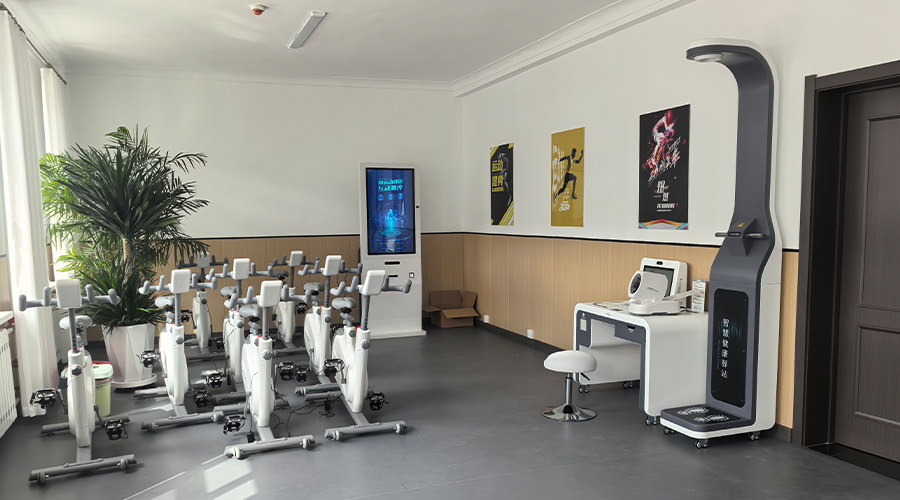
2. One device, covering all core detection requirements
The health all-in-one machine integrates multiple health detection functions and can quickly complete tests for various indicators such as blood pressure, blood sugar, blood lipids, electrocardiogram, and blood oxygen. With just one health all-in-one machine, the core needs of daily health monitoring in enterprises can be covered, allowing employees to enjoy convenient health management services without leaving the factory. This significantly reduces the threshold for enterprises to establish a health management system.
III. From "Passive Screening" to "Active Management"
Among the evaluation indicators for building a healthy enterprise, the coverage rate of employee health monitoring is an important assessment item. Under the traditional model, enterprises often rely on annual physical examinations, which result in lagging data and difficulty in tracking. However, the introduction of health integration machines enables enterprises to establish a regular health data collection mechanism - regular monitoring, dynamic management, and traceable trends, truly achieving the transformation from "passive physical examination" to "active health management".
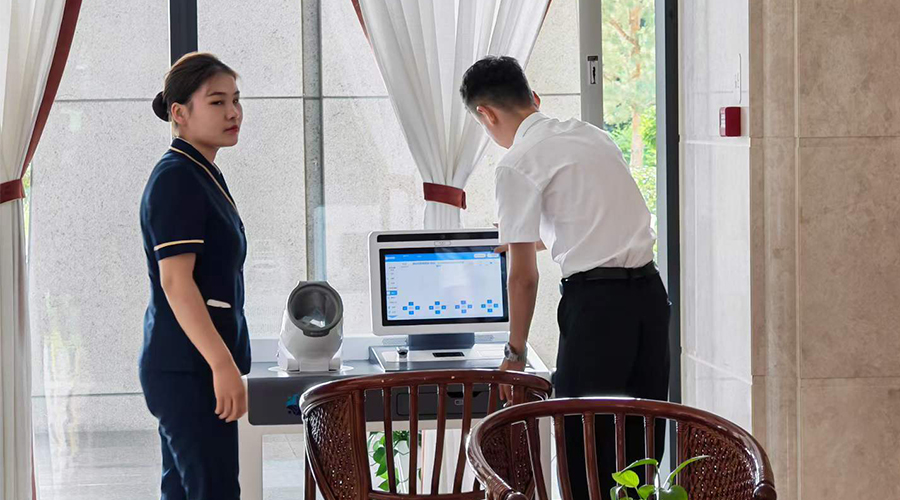
IV. AI Empowerment: Making Health Management More Intelligent
What is particularly worth mentioning is that the health all-in-one machine equipped with the AI health assistant can also provide employees with intelligent health consultation and advice - answering questions immediately after measurement, and answering them promptly. This further enhances the professionalism and convenience of health management, allowing every employee to receive personalized health guidance.
V. The policy has set the direction, and the tools are already in place.
The construction of a healthy enterprise is not just a slogan; it is a systematic project that needs to be implemented effectively. The health integration machine serves as an efficient bridge connecting policy requirements with actual implementation – helping enterprises achieve health management standards at the lowest cost and seizing the initiative in the construction of a healthy enterprise.