


Many enterprises are highly focused on ensuring safe production, but they still can't avoid the problem of employees working while sick! Today, we will clarify four types of high-risk situations where employees work while sick in the workplace. To completely avoid potential safety hazards, a pre-job health detection all-in-one machine can handle all pre-job screening tasks.
The first type is working after drinking. Operating equipment and performing work under the influence of alcohol is a clear safety violation. If an accident occurs, the enterprise will be hard-pressed to avoid responsibility. Traditional manual inspections have many loopholes and are prone to missed detections. The pre-job health detection all-in-one machine can quickly and accurately detect alcohol levels, directly blocking those who are working under the influence of alcohol, and guarding the first line of safety.
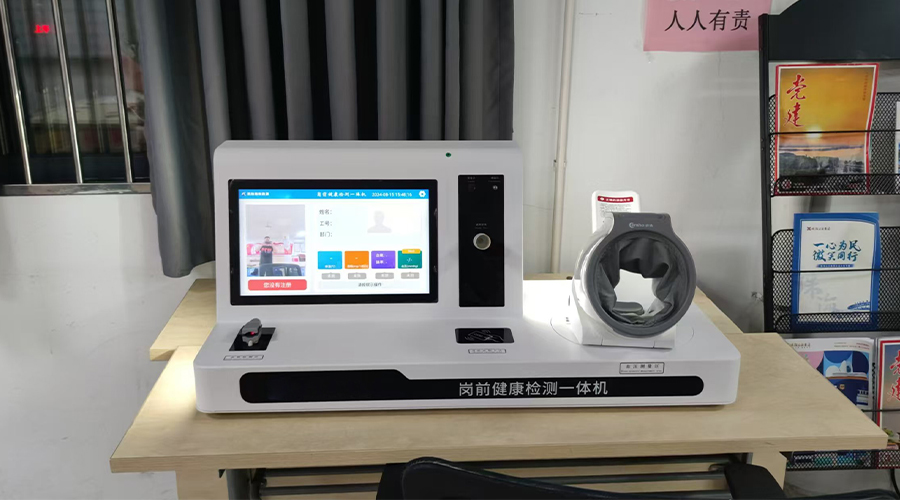
The second type: Employees with abnormal blood pressure continue to work. If an employee's systolic blood pressure exceeds 160 mmHg and still remains in a high-risk position, it is highly likely to cause risks to the heart and blood vessels, posing a major safety hazard. Manual testing has large errors and is not standardized. The integrated health check before the post can accurately measure blood pressure and automatically determine if it exceeds the limit, promptly preventing employees with abnormal blood pressure from starting work.
The third type: Work only when blood oxygen level is normal. If an employee's blood oxygen level drops below 95%, there will be problems such as insufficient oxygen supply, slower reactions, and lack of concentration. This can easily lead to operational errors and accidents. Humans cannot accurately determine the physical condition. The pre-job health detection machine can complete blood oxygen testing in one step, accurately identify abnormal conditions, and eliminate risky operations.
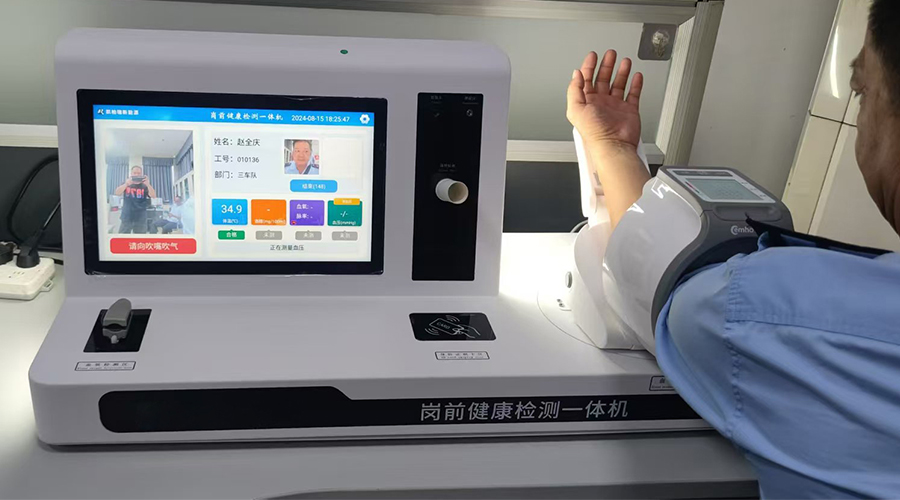
The fourth method is "fever-based entry". Employees can only start work if their body temperature is below 37.3℃. This significantly reduces the working efficiency of the employees, increases the operational risks, and poses a potential risk of cross-infection. Manual temperature measurement is inefficient and difficult to manage. The integrated machine for pre-job health screening can quickly and accurately measure body temperature, conduct regular screenings for feverish individuals, and effectively control the risks before they start work.
Traditional manual screening is inefficient, relies on human judgment, and is prone to missed detections. It is fundamentally unable to completely avoid the risk of working while carrying an illness. The integrated machine for pre-job health screening relies on intelligent recognition, automatic warning, and precise interception based on big data. It does not require manual intervention and specifically addresses four major risks of working while ill - alcohol consumption, high blood pressure, low blood oxygen, and fever. It intelligently builds a safety defense line for the enterprise.