


In 2025, a piece of data quietly circulated: leading companies such as Tencent, Alibaba, ByteDance, and Huawei simultaneously deployed health screening kiosks on a large scale across their office spaces.
This wasn't following trends or marketing hype—it was a genuine, substantial investment.
Why? Because these tech giants have already done the math: the loss caused by the sudden collapse of a key employee far exceeds the cost of a health screening kiosk by hundreds of times. And what's truly valuable isn't the device itself, but the accumulated employee health data assets it continuously generates.
This article won't discuss product specifications. Instead, it focuses on one central question: What exactly are these big companies fighting for?
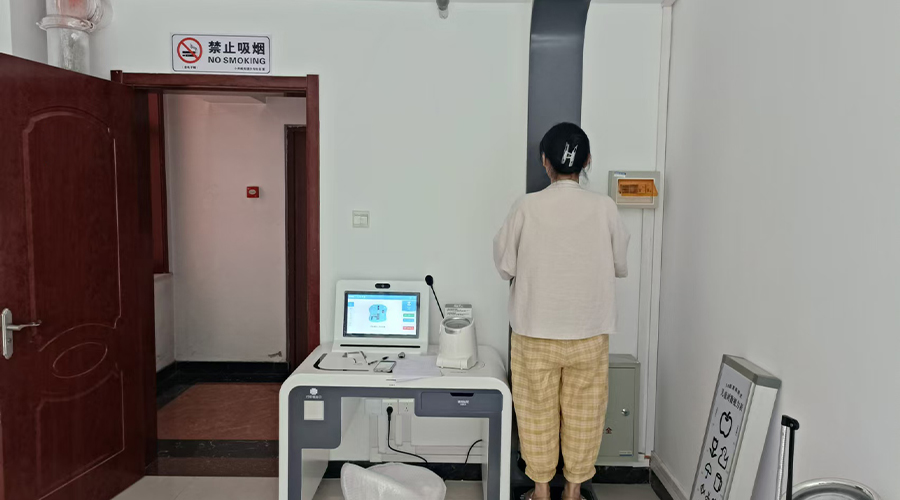
1. The Health Anxiety of Big Companies: It's Not "Fear of Death," But "Fear of Data Gaps"
Let’s start with a harsh reality.
In 2024, a 32-year-old engineer at a leading internet company suffered a sudden heart attack at his workstation and died despite emergency treatment. A post-incident review revealed that the employee had experienced multiple instances of abnormal blood pressure and skyrocketing heart rate over the past six months—yet the company remained completely unaware.
It wasn’t that there were no health check-ups; rather, annual physical exams simply failed to capture day-to-day health fluctuations.
This exposes a fatal flaw in traditional corporate health management: data fragmentation.
2. Why Is Health Data the "Most Valuable Asset"?
You might think this sounds exaggerated—how valuable can employee health data really be?
Let the numbers speak.
1. A Shocking Cost Breakdown
According to the "2024 China Workplace Health White Paper":
Direct costs caused by employee health issues (medical claims, work injury compensation, accident payouts): an average of 800,000 to 3 million yuan per employee annually.
Hidden costs (reduced efficiency, project delays, team morale decline, recruitment and replacement expenses): approximately 3 to 5 times the direct costs.
Replacement cost when key employees leave or become incapacitated due to health issues: 1.5 to 2 times their annual salary.
In comparison, the purchase cost of a single health screening device is almost negligible against these figures.
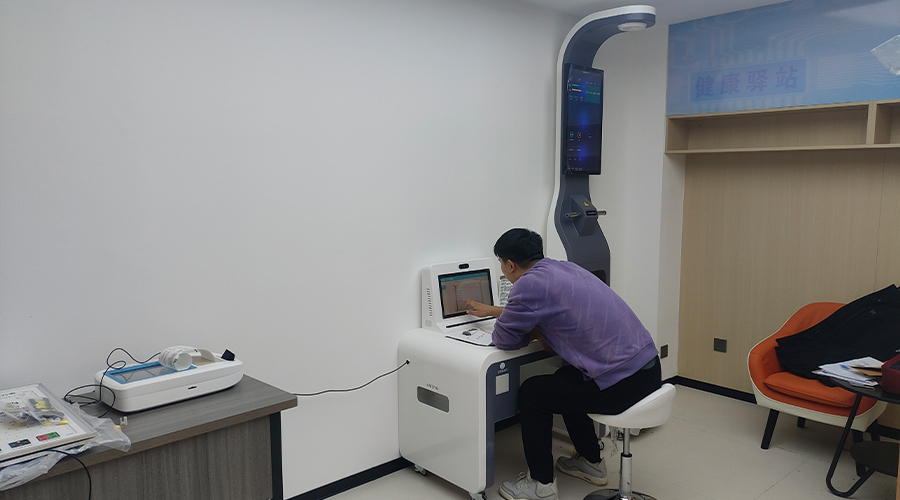
2. The "Three Levels of Value" of Health Data
What major companies value is the three-tiered progressive value brought by health data:
First level: Risk Warning - "Don't wait until it's too late to regret it"
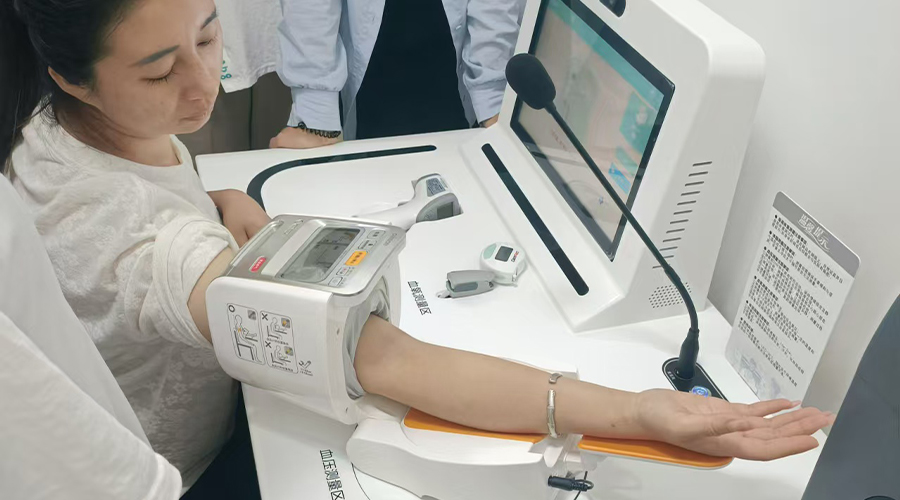
The health monitoring terminal collects data on indicators such as blood pressure, heart rate, blood oxygen level, body temperature, and electrocardiogram at a high frequency. It can issue warnings at the early stage when there are abnormal trends in an employee's health. It doesn't wait until a heart attack occurs before taking action; instead, it intervenes when the blood pressure has been consistently high for three consecutive weeks.
The earlier the problem is detected, the less the company will lose - one million yuan less.
III. Why "Hastening Installation" rather than "Observing and Waiting"?
You might ask: Since it's so good, why can't we take it slowly?
Because health data has the "irreversibility of time".
The data gap cannot be filled.
An employee had a heart attack today. If you go and install the health monitoring device again, the health trend data for the past six months will never be retrievable. The loss has already occurred and the evidence has been lost.
2. Data accumulation requires a period
The analytical value of health data is based on the time dimension. A single test is called a "physical examination", while frequent tests over a period of 6 months or 12 months constitute data assets. The earlier it is deployed, the deeper the data pool becomes, and the more precise the analytical insights will be.
3. Competitors are already in motion
When your peers have established an employee health risk model using a health monitoring device and implemented a precise talent protection strategy, while you are still conducting health management through "annual physical examination reports + HR verbal care" - the gap will widen exponentially.
Health management is not about having more equipment; it's about having more timely data.
Conclusion: Health data is redefining corporate competitiveness
Returning to the question posed in the title: What exactly are the big companies competing for?
It's not about seizing a health monitoring device, nor is it about grasping a concept; rather, it's about seizing the time window - before the health risks escalate, establishing one's own employee health data assets.
The future of enterprise competition is not just about competing in terms of products, technology, and capital; it also involves competing in terms of the ability to protect people. And the health monitoring device is the starting line that takes off the earliest in this competition.
The equipment can be used for ten years, but data accumulation cannot wait for a single day.
When your competitors have already adopted data-driven health management, and you are still making decisions based on "feelings" and "annual reports" - this is the greatest risk.